
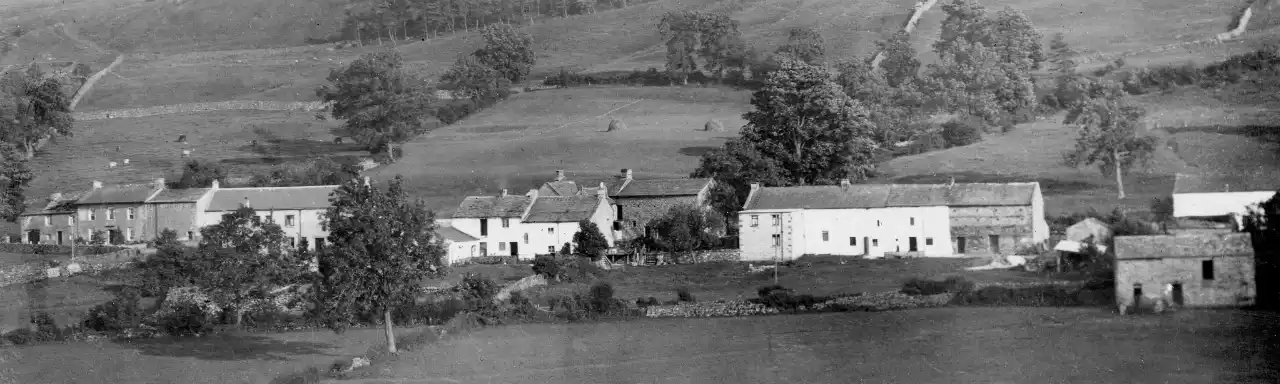
Newbiggin
A quiet hamlet steeped in farming tradition
The name of Newbiggin suggests that it was settled somewhat later than Thoralby, since it means ‘new building’. The village must have been established after the Norman Conquest because it was not mentioned in the Domesday Book, whereas smaller settlements like Croxby and Eshington were. 'Bigging' is a Middle English word that did not come into use until around 1150. So, Newbiggin will have been settled some time between 1150 and 1298, the date of the oldest surviving documentary reference to it. The village appears to have been established to house the foresters responsible for the maintenance of Bishopdale Chase, which was held by the lords of Middleham and reserved for hunting. Similar foresters’ villages were established in the 12th or 13th century at Bainbridge for the Forest of Wensleydale and at Buckden for Langstrothdale Chase.
Agricultural Heritage
Newbiggin has always been primarily agricultural in character. The hamlet consists of working farms that have been in the same families for generations. Traditional farming methods have been passed down through centuries, adapting to changing times while maintaining connection to the land.
Hay Meadows
The area around Newbiggin is particularly noted for its traditional hay meadows. These species-rich grasslands, managed according to centuries-old practices, burst into color each summer with native wildflowers. Many of these meadows are now protected as Sites of Special Scientific Interest.
Historic Farmsteads
Newbiggin's stone farmhouses and barns date primarily from the 17th and 18th centuries. These buildings exemplify traditional Dales vernacular architecture, built from local limestone with massive stone walls designed to withstand harsh winter weather. Many retain their original features and layouts.
Close Community
Despite its small size, Newbiggin has maintained a strong sense of community. Families have worked together through seasons of farming, sharing labor during hay time and sheep gathering. This mutual support has been essential to survival in this challenging environment.
Industry
Explore the industries that supplemented farming life in Newbiggin, including traditional crafts, hand-knitting, and other cottage industries.
Life in Newbiggin
Life in Newbiggin has always revolved around the agricultural calendar. Spring lambing, summer haymaking, autumn sheep sales, and winter feeding have structured daily life for centuries. The hamlet's isolation meant residents needed to be largely self-sufficient, with each farm producing most of what it needed.
During the 18th and 19th centuries, some residents supplemented farm income through hand-knitting, a common cottage industry throughout the Dales. Women and children would knit stockings and other garments for sale at market, providing essential additional income for farming families.
The hamlet had its own chapel, serving as a place of worship for families who found the journey to Thoralby's church difficult, especially in winter. Though the chapel is no longer in regular use, it remains an important part of Newbiggin's heritage.
Newbiggin Today
Today, Newbiggin remains a working agricultural community. While modern machinery and methods have changed some aspects of farming, the essential rhythm of life tied to the seasons continues. The hamlet's farms remain family-run, with knowledge and skills passed from generation to generation.
The area's natural beauty and tranquility attract walkers who appreciate the unspoiled Dales landscape. Yet Newbiggin has retained its character as a genuine working hamlet rather than becoming a tourist destination, offering an authentic glimpse of traditional Dales farming life.